The Estimate Autopsy: Five Lines on Your Garage Bill That Deserve a Polite Question

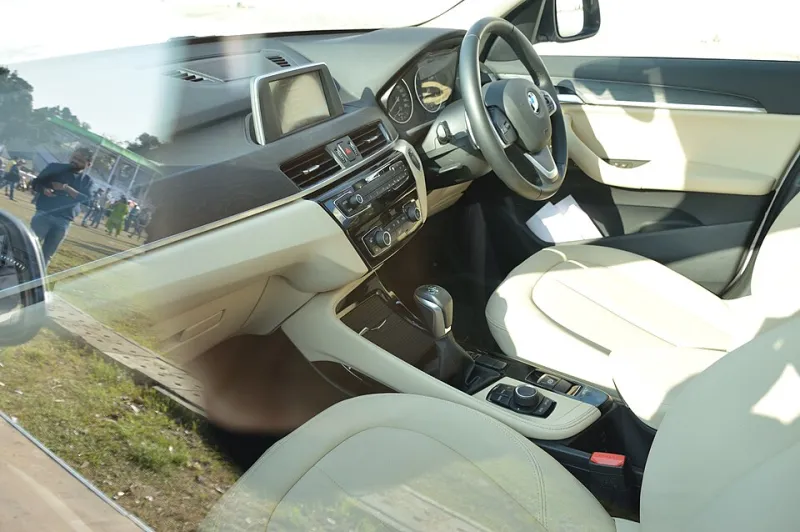
Photo: Retired electrician, CC0, via Wikimedia Commons
A garage estimate can be a single sentence on a text message or a three-page breakdown with more part numbers than a parts catalogue. Most of us look at the bottom line, wince, and say yes or no. But the line items are where the useful information lives. You do not need to become a mechanic to read them. You just need to know which lines deserve a polite question.
This is not about assuming the garage is trying to rip you off. Good garages write estimates quickly, often from a parts system and a labour guide, and the shorthand can be vague. Asking a fair question is not adversarial. It is how you authorise work with your eyes open.
1. 'Parts: £X' with no brand or part number
A parts line with no detail is the most common vague entry. Is that a genuine manufacturer part, an OEM-quality part from a reputable brand, or a budget aftermarket item? All three can be legitimate, but they are not the same thing. A cheap wheel bearing might be fine, or it might be noisy again within a year.
Ask: 'Can you tell me the brand and part number, and what warranty comes with it?' A good garage will have no problem answering. If you are comparing quotes, compare like for like. A quote that uses a known brand and a two-year warranty may be better value than a cheaper quote using an unbranded part with a 12-month guarantee.
2. 'While we are in there...' extras
This line can be genuinely helpful or quietly expensive. If the cambelt is being changed and the water pump is driven by the same belt, replacing the pump at the same time is often sensible. If the clutch is out, a rear main seal is easier to reach. Those are real labour savings.
But 'while we are in there' should be itemised and optional. Ask: 'Is this essential, recommended, or optional? What would it cost if I did it as a separate job later?' If the answer is that it is purely precautionary and doubles the bill, you can decide whether to proceed. If it is a known weak point on your model, it may be worth doing.
3. 'OEM equivalent' or 'genuine or equivalent'
This wording is common and slightly slippery. OEM means original equipment manufacturer — the company that made the part for the car maker. An 'OEM equivalent' or 'OE quality' part is not necessarily made by that company. It may be perfectly good, but the phrase is a quality claim, not a guarantee.
Ask: 'Which brand is the equivalent part, and is it the same specification as the original?' For safety-critical parts such as brakes, suspension and steering, it is fair to ask for a known brand. For a cabin filter or a wiper blade, the stakes are lower. Match the question to the part.
4. 'Labour: 3.5 hours' or 'unit'
Labour is often quoted in hours from a book time, which is a standard estimate for the job. That is normal. What matters is the hourly rate and whether the hours include diagnostic work, road testing and setup. A job that needs wheel alignment or air suspension calibration can take longer than the basic book time.
Ask: 'What is your hourly rate, and does this labour figure include diagnostics and road test?' If the estimate says 3.5 hours and the garage then adds two hours of 'investigation', you want to know why before the bill arrives. A fair garage will explain the extra time and ask before doing it.
5. 'Diagnostic charge' or 'sundries'
Diagnostic charges are legitimate. Fault-finding a modern car can take time, and a scan tool is not a magic wand. The fair question is what the charge includes and whether it is credited against the repair if you go ahead. Some garages charge a fixed diagnostic fee and deduct it from the repair; others do not. Ask before you book.
Sundries and consumables are usually small items: brake cleaner, clips, bolts, disposal of old oil. A £5 to £20 charge is normal. A vague 'sundries' line that adds £60 deserves a breakdown. Ask: 'What does the sundries charge cover?' It is a fair question, not an accusation.
How to respond without turning it into a row
You do not need to challenge every line. Pick the ones that affect safety, cost or warranty. Ask for the estimate to be reissued with part brands, part numbers and optional extras clearly marked. A simple script works: 'Thanks for this. Before I authorise, can you confirm the brand of the brake discs, whether the extra work is optional, and what the diagnostic charge covers?'
If a garage refuses to answer basic questions about parts and labour, that is useful information. If it answers clearly, you have found a garage worth keeping. The estimate is not just a price. It is a description of what will happen to your car. Read it like one.