The Lie on the Dash: Seven Wear Clues That Give a Clocked Car Away
Sixty thousand miles on the dash. Your knee, resting against a collapsed seat bolster, is quietly telling you it's more like a hundred and twenty.
Clocking never went away. It just got easier. A laptop, an OBD cable and a bit of software can take 60,000 miles off a digital dash in less time than it takes to drink a coffee, and a haircut like that is worth well over a grand at resale. The trade knows it, the online history checkers know it, and yet cars still change hands every weekend with a mileage figure that doesn't match the wear.
Wear, thankfully, is honest. It can't be wound back with a cable. Here's where to look.
Start with the free check, before you leave the house
The government's MOT history service is free and it's the single most useful tool a used buyer has. Every MOT records the mileage at the test, so you get a year-by-year graph of how the car has been used.
What you're looking for:
- A mileage figure that goes backwards, however slightly. That's the end of the conversation.
- Years where no mileage was recorded, especially several in a row.
- A long run of steady annual figures followed by a sudden freeze, which often means the car sat around — or the numbers got tidied up.
- Annual averages that don't match the advert. A car doing 18,000 miles a year for eight years that suddenly appears for sale at 62,000 miles is telling you something.
- Advisories that hint at heavy use — worn suspension, corroded brake pipes, tyre wear — on a supposedly low-mileage car.
Screenshot all of it. It's your evidence if the deal goes sour.
1. Pedal rubbers and the heel pad
The accelerator and brake pedal covers wear through on the outer edge, and no one replaces them for a mileage haircut. A 40,000-mile car should still have visible tread pattern on the rubber. Worn-through metal or a shiny, polished surface means serious use.
Same story on the floor: the carpet heel pad under the driver's right heel wears through somewhere around the 80,000 to 100,000 mark. Look for an aftermarket mat hiding a hole.
2. The seat bolster and the seat base
Sit in the driver's seat and look at the outer bolster — the bit you slide over every time you get in. Foam collapse, cracked leather, worn-through fabric on that one panel is the most reliable mileage tell there is. Compare it to the passenger seat. A genuine low-mileage car has two seats that look like they belong to the same car.
3. Steering wheel shine and gear knob wear
Gripping a wheel for a hundred thousand miles polishes it. Leather goes shiny and glazed at ten and two, and eventually wears down to the base material. Gear knob numerals fade, the gaiter goes polished, and the handbrake grip loses its texture.
A shiny wheel on a car advertised at 45,000 miles is one of the oldest tells in the book.
4. The switches nobody thinks to replace
The indicator stalk markings rub off. Window switches go soft and shiny. Key fob buttons wear through to the rubber — though a spare fob might be pristine, so check both. Door handles, the boot release and the bonnet catch all show use, and none of them get changed when a car is clocked.
5. Glass, lenses and the front end
Motorway miles sandblast a windscreen. Look at the glass low down, against a low sun, and if it's pitted and hazy it's done real distance. Headlight lenses go cloudy for the same reason, and the leading edge of the bonnet and the front number plate collect stone chips.
A cosmetically perfect nose on a high-mileage car usually means it's been painted — but a chalky, chipped nose on a "30,000-mile" car means something else entirely.
6. Brakes, tyres and mechanical feel
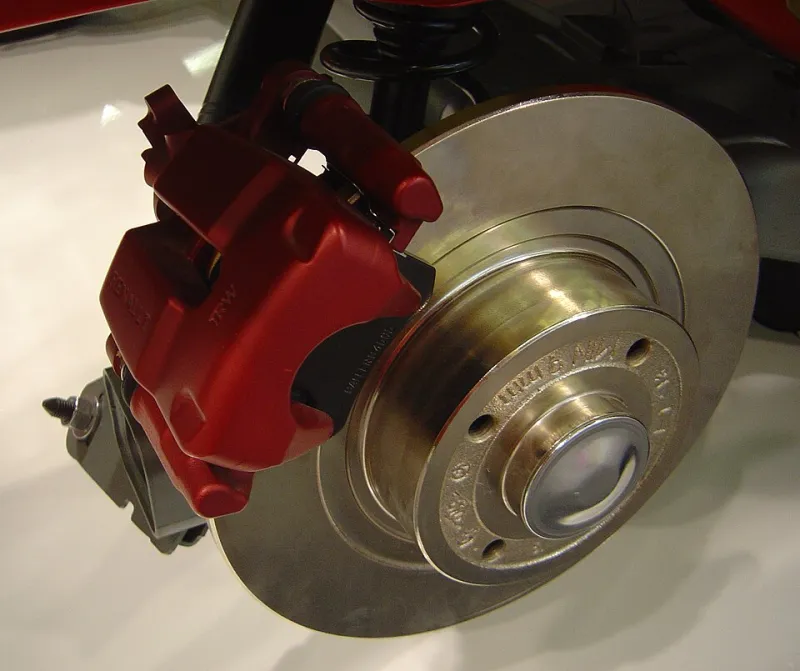
Brake discs develop a lip at the edge as they wear down; discs with a pronounced lip on a low-mileage car don't add up. Check tyre date codes — the four-digit DOT stamp on the sidewall — and whether all four tyres are the same brand. Four mismatched budget tyres on a pampered low-mileage car is a pattern worth questioning.
Then drive it. A clutch that bites high, a gearbox that crunches into second when cold, suspension that clonks over speed humps — these are wear items, and they wear with miles, not with years.
7. The paperwork that doesn't line up
Service stamps are easy to fake and blank books are sold online. What's harder to fake is a folder of invoices with mileages printed on them. Check the mileage on the last MOT against the mileage on the last service invoice. Check the cambelt sticker. Check whether the number of previous keepers matches the story you're being told.
If the seller says the car has been in the family for years but the V5C shows four keepers and the service history is from three different counties, ask a polite question and watch the answer.
The ten-minute driveway checklist
- MOT history pulled and screenshotted before you travel.
- Photos of the odometer, pedals, driver's seat, steering wheel and gear knob.
- Car started from cold, not warm when you arrive.
- A test drive including a steep hill in a high gear and a few tight junctions.
- Mileage written on the receipt, in words as well as figures.
- A history check for finance, theft and write-off markers.
If you've already paid
Buy from a trader and the Consumer Rights Act 2015 is on your side — the car must be as described, and a clocked mileage is a straightforward misdescription. Report it to Trading Standards through Citizens Advice and put your complaint in writing quickly.
Private sales are harder, but deliberately misrepresenting mileage is still misrepresentation, and small claims is a realistic route if you have the advert, the messages and the receipt. Keep everything. Screenshot the listing the day you see it, because it will vanish the moment you query it.
Wear doesn't lie. People do. Check the bits that can't be reset.