The Filter Hiding Behind Your Glovebox Is Quietly Wrecking Your Winter Demisting
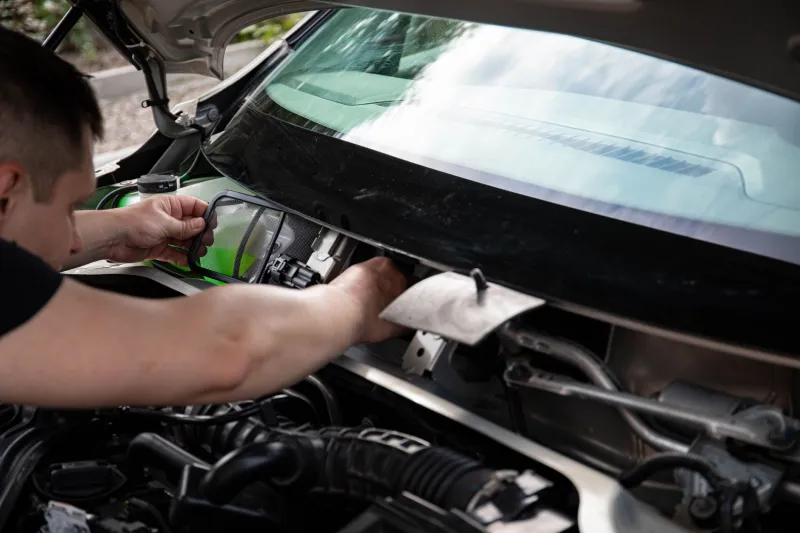
Every winter, drivers arrive at garages with the same complaint: the heater takes ages to clear the windscreen, the blower seems weak, and there is a faint fusty whiff when the fan starts. Often they blame the weather, the wipers, or the battery. More often than you would think, the answer is a rectangular filter the size of a paperback, tucked behind the glovebox and quietly choking the whole system.
It is not a glamorous part. Nobody puts a cabin filter on a poster. But on a wet UK morning, with breath, rain and a steaming flask of tea all adding moisture to the cabin, it can be the difference between a windscreen that clears in seconds and one that stays misty halfway down the A-road.
Why your windscreen mists when the heater is on
Demisting is not really about heat alone. It is about moving a decent volume of dry air across the glass. Most cars switch on the air-conditioning when you select the demist setting, because the air-con unit acts as a dehumidifier. Warm, dry air picks up moisture from the glass and carries it away. If the cabin filter is clogged, the blower is pushing against a blocked straw. Airflow drops, the air-con cannot do its job properly, and the mist hangs around like a guest who will not take the hint.
Then there is the smell. A cabin filter traps pollen, road grime, leaves and general urban fluff. In a British winter it also gets damp. Damp trapped debris is exactly the sort of environment where bacteria and mould have a lovely time. The result is that musty, old-sock aroma through the vents. An air freshener covers it for about a day. It does not solve it.
The filter nobody orders
The part has a few names: cabin filter, pollen filter, interior filter. Some are plain particulate filters; others have an activated-carbon layer to reduce smells. Neither type fixes a leak, and neither is the same as your engine air filter. The cabin filter cleans the air going into the passenger compartment. The engine filter cleans air going into the engine. They live in different places and do different jobs.
Most manufacturers suggest a new cabin filter every 12,000 to 20,000 miles, or roughly once a year. In the real world, a car that parks under trees, carries a dog, or spends its life in stop-start traffic may need one sooner. It is not usually a major MOT item, but a neglected filter can make the cabin feel tired and the heater feel weak long before anything serious is wrong.
Ten minutes, one torch, and an empty glovebox
On many popular UK cars, the filter sits directly behind the glovebox. You do not need a ramp or a diagnostic machine. You need a torch, perhaps a small screwdriver, and a willingness to empty the glovebox of its collection of old receipts, spare masks and plastic forks.
Open the glovebox and look at how it stops when it drops. Some have squeeze tabs on the sides; others have a pin or a strap. Release the stops so the box hangs lower than normal. Behind it you should see a rectangular plastic cover. That cover may be held by clips or a couple of screws. Remove it gently, noting which way round it sits.
The old filter slides out. Take a look. A light grey filter is normal-ish. A dark, clogged, leaf-speckled filter is not. If it looks like a hedge fund for debris, replace it. Check the housing for leaves and clean them out with a vacuum or a soft brush. Then fit the new filter the right way round. Most have an arrow marked 'airflow' or 'down'. Getting that wrong can reduce performance and make the filter sit poorly.
Before you refit everything, switch the blower on through each speed. You should hear a healthy change in airflow. If the motor sounds strained or the filter does not fit flush, stop and check your work. Do not force trim clips in cold weather; brittle plastic is a winter tradition nobody enjoys.
When it is a DIY job, and when to book it in
If your filter is behind the glovebox and the cover comes off without a fight, this is a sensible DIY job. Filters are cheap, often £8 to £25 depending on the car and whether it is a carbon type. A garage will usually charge half an hour to an hour, so the total is not enormous, but it is still money you can keep for something more interesting.
Book it in if the filter is under the bonnet in an awkward scuttle panel, if the glovebox has to come out completely, or if the housing is hidden behind dashboard trim. Some cars make this a five-minute job. Others make it a contortionist's audition. There is no shame in stopping before you snap a clip.
Also book it in if a new filter does not fix the smell. A cabin filter can hold odours, but it cannot cure a leaking heater matrix, a blocked air-con drain, or water getting into the carpets. A sweet, syrupy smell is coolant. A persistent damp smell with wet footwells is a leak. Those need proper diagnosis, not another filter.
Stop feeding the damp
A fresh filter works best when you stop giving it so much to do. In winter, leave recirculation off unless you are stuck behind a smoky lorry. Recirculation traps the moisture from your breath and wet clothes, which is exactly what you do not want when demisting. Shake out coats before getting in. Clear leaves from the scuttle area. Run the air-con for ten minutes a week, even in winter, to keep the system from getting stale.
It is a small part in an unglamorous place. But if your windows fog up like a café window and your heater has started to smell like a wet dog, spend ten minutes behind the glovebox. It is one of the cheapest fixes in motoring, and one of the easiest to ignore until February.