The Switch You Ignore Until June: Why Ten Minutes of Air-Con a Week Pays for Itself

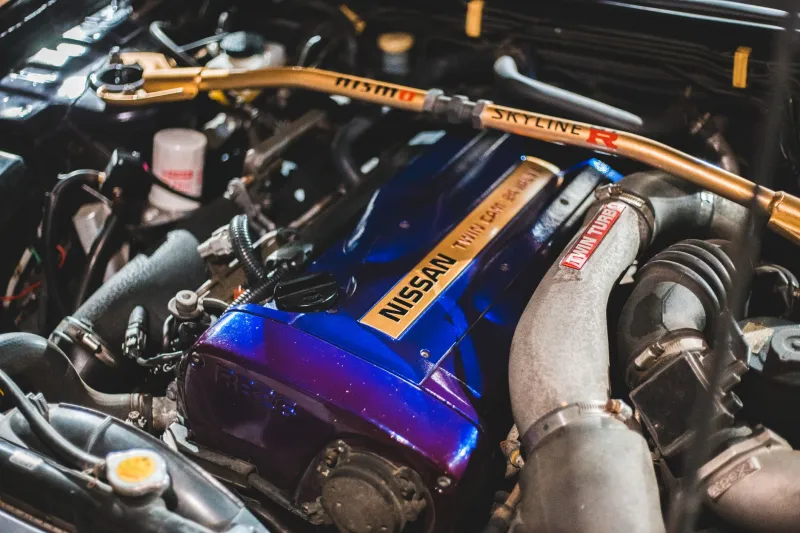
Photo: Arkady Lifshits overdriv3, CC0, via Wikimedia Commons
There's a switch on your dashboard that gets a lot of attention in July and virtually none by bonfire night. The air-con button. Plenty of drivers genuinely believe it's a cooling device and nothing more, so once the gloves come out it gets switched off until the first warm day of next year. That's the logic that lands people in a garage in March with a four-figure quote for a seized compressor.
I've watched this happen for years. The car that comes in with "the air-con doesn't work, but I only use it in summer anyway" is almost always the car that's had the system dormant for six months. Cold weather is not a holiday for air-conditioning. It's the season it quietly earns its keep.
What's actually happening when the system sits idle
Your air-con isn't just gas and a pump. The refrigerant carries a small charge of lubricating oil around the circuit, and that oil is what keeps the compressor's internals and the rubber O-rings at every joint supple. When the system runs, oil moves. When it doesn't, oil settles, seals dry out and shrink, and microscopic gaps open up. Gas escapes slowly through seals that were never designed to sit bone-dry for half a year.
Then spring arrives, you press the button, the compressor clutch engages, and it's running with less lubrication than it needs. That's the beginning of the noise. A grumbling or rattling compressor is expensive because the part itself is expensive, and on many modern cars it's buried behind the bumper and the auxiliary belt.
There's a second reason, and it's the one that matters most in Britain between November and February.
Demisting is a dehumidifying job, not a heating job
Cold glass fogs because warm, moist air inside the cabin hits it and condenses. Your heater blows warm air at the screen, which raises the glass temperature — helpful, but slow. Air-conditioning does something different: as refrigerant expands inside the evaporator, it pulls moisture out of the air passing over it. That moisture drains away underneath the car instead of settling on your windscreen.
So the fastest demist on a drizzly morning is air-con on, heater on hot, directed at the glass, fresh air rather than recirculation. The A/C dries the air; the heater warms the glass. Together they clear a fogged screen in a fraction of the time either manages alone. Anyone who's driven a car with a dead air-con system in January knows exactly how much longer that crawl to work feels.
The weekly routine
Ten minutes. That's the whole commitment. Once a week, on a normal drive, switch the air-con on and leave it on for the journey. Doesn't matter that it's three degrees outside — the system doesn't care what the ambient temperature is, and modern climate control will blend the output so you're not freezing.
A few practical points from the workshop:
- Do it on a run, not on the drive. The compressor needs the engine running and the system needs airflow through the condenser in front of the radiator. Ten minutes at 30mph is worth more than twenty idling on the driveway.
- Leave it on in traffic and in rain. Recirculation plus A/C is the quickest way to stop the windows misting when you're crawling along the A406 in a downpour.
- Don't chase maximum cold. You're circulating oil and drying air, not trying to chill the cabin to arctic levels. Normal setting is fine.
- Run it in winter, then use it in summer. A system exercised all year round holds its gas far better than one that hibernates.
If the car has automatic climate control, this is mostly done for you — but check the A/C indicator actually lights up. Plenty of people have driven for two years assuming it was on when it wasn't.
The warning signs that mean a real problem
A musty, damp-towel smell when you first switch on is usually mould on the evaporator, fed by a blocked or clogged cabin filter and a drain tube that isn't clearing. It's unpleasant rather than terminal, and a filter change plus a proper clean of the evaporator housing sorts most cases. Worth knowing that a blocked drain can also dump water into the passenger footwell, which is how you end up with a damp carpet and a corroded module you didn't know existed.
Other symptoms deserve proper diagnosis rather than a top-up:
- Cooling that fades to lukewarm within a few weeks of a recharge — that's a leak, not a shortage.
- Rhythmic clicking from the engine bay as the compressor cycles on and off every few seconds.
- Hissing or gurgling from behind the dash.
- Water pooling under the car after a long run is normal. Water inside the car is not.
One point on the condenser, since we're heading into salt season: it lives at the front of the car, right where grit and brine get flung at it. Corrosion there is one of the most common causes of a slow leak on a car that's eight or nine years old. If you've had a string of recharges, ask for the condenser to be inspected rather than just gassed again.
Where the upselling starts
Two phrases to listen for. The first is "air-con service" as a fixed-price menu item on a car that hasn't been looked at. A genuine service means recovering the refrigerant, weighing what came out, vacuum-testing the system, and refilling with the correct amount of gas and oil. If they can't tell you what weight came out, it isn't a service.
The second is a recharge on a system that's leaking. Topping up a leaking system is money evaporating in slow motion — literally. Before any gas goes in, a pressure test or a UV dye check should establish whether the system holds. If a garage wants to recharge first and investigate later, that's your cue to ask why.
On pricing, expect R134a systems (most cars up to roughly the mid-2010s) to sit in the sixty to a hundred and twenty pound bracket for a proper recover-and-recharge, and R1234yf systems — the newer, pricier gas — noticeably higher. Anything involving a compressor replacement or a condenser swap is a different conversation entirely, and worth a second quote.
Ten minutes versus a four-figure bill
The habit costs you nothing but a bit of fuel. The alternative, on a car that's sat with the system dormant since September, is a spring diagnosis, a leak hunt, and possibly a compressor that's been grinding itself to bits in the meantime.
So press the button next time you're out. Leave it on for the trip. Your windscreen will clear faster tomorrow morning, and your compressor will thank you in April.