Hitched and Hidden: Reading a Used Car's Towing History in Ten Minutes
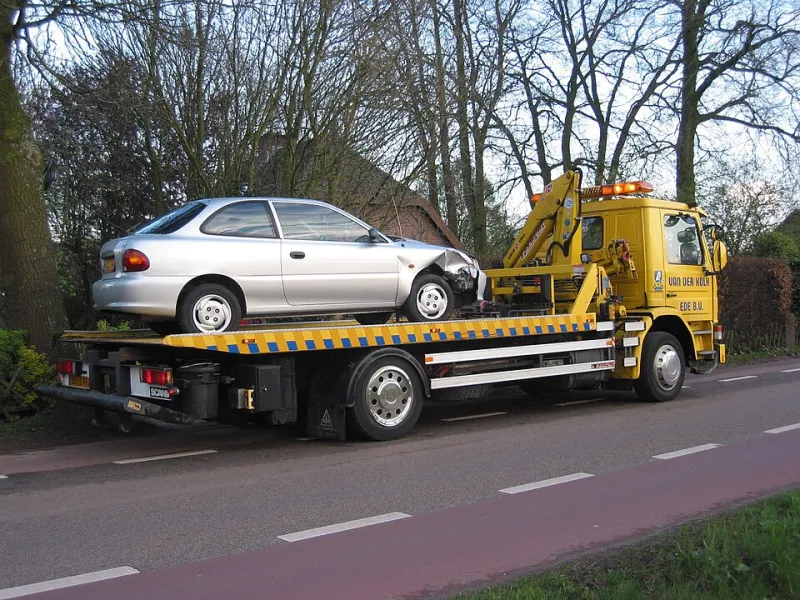
Photo: Unknown, CC BY-SA 3.0, via Wikimedia Commons
There's a particular look people give a used car with a towbar. Half of them walk away on principle, as if the towbar were a sexually transmitted disease. The other half don't notice it at all until they're signing the paperwork.
Both reactions are wrong. A towbar is a clue, not a verdict. What matters is what the car was pulling and how seriously the owner took it, and you can work most of that out in ten minutes with a torch and a nose.
Two kinds of towing life
There's the caravan owner: annual service, tyres checked, gearbox oil changed early because the handbook says severe use. That car is often in better shape than a town car with the same mileage. Then there's the bloke who bought a 1.6 hatchback to lug a plant trailer twice a month and never opened the bonnet except to top up the screenwash. Same towbar. Very different car.
Your job is to work out which one you're standing next to.
Read the towbar itself
Look at the bar and the socket before you look at anything else.
A fixed flange towbar with a worn tow ball — bare metal shining through the paint where the coupling has rubbed — has clearly done work. That's not a problem in itself; a shiny, unused swan neck on a ten-year-old car is actually more suspicious, because it suggests the bar was fitted recently to make the car look useful.
Check the type plate. A proper bar has one, with an approval number. Look at the electrics: a 13-pin socket suggests caravan use with charging and fridge circuits, a 7-pin suggests a trailer. Then open the boot and follow the wiring. A dedicated loom with a proper relay and grommet is a professional job. Scotchlocks, insulation tape and a wire shoved through a drilled hole in the boot floor is a DIY lash-up, and it's exactly where water gets in.
The cooling system tells you how hard it worked
Manufacturers that sell a car with a towbar option usually also offer an uprated cooling pack — a bigger radiator, an auxiliary transmission cooler, sometimes a stronger fan. If you see non-standard cooling pipework, an extra cooler in front of the radiator, or a towing-spec radiator, the owner took it seriously. Bonus.
Then look for leaks. Extra coolers and their hoses are another failure point, and a car that's been towing in summer traffic is exactly the environment that finds weak hoses first.
Springs, dampers and the rear end
Towing loads the rear axle. Look in the coil springs for rubber assisters — doughnut-shaped inserts that stop the back end sagging under a nose weight. Their presence tells you the car carried a heavy trailer regularly. It doesn't condemn it, but it does mean the rear springs and dampers have had a harder life than the mileage suggests.
Check the ride height side to side. Sit on the boot lip and bounce it. A tired rear end that bottoms out over speed humps needs springs or dampers, and that's a few hundred pounds on most cars. Also check the rear tyres for uneven wear — towing with a badly loaded trailer scrubs them.
Clutch, flywheel and gearbox
This is where towing history gets expensive. A dual-mass flywheel that's been heat-cycled by repeated hill starts with a trailer will rattle at idle and judder when you pull away. A clutch that's done that work bites high and can slip in fourth on a hill at low revs.
On the test drive, pull away on an incline and give it some throttle in a high gear. Then, once you've stopped, have a proper sniff near the front. A hot, burnt, metallic clutch smell that lingers after a gentle drive is not a good sign.
Automatics deserve the same attention. Towing is hard on a torque converter and on the fluid itself. Check the transmission fluid colour if there's a dipstick, look for a tow or sport mode, and ask directly whether the gearbox oil has ever been changed. A towing car with no gearbox oil history is a gamble.
Get underneath, properly
Borrow a torch and get on your hands and knees. Rear chassis rails, the boot floor seams, the spare wheel well and the rear panel are where towing cars corrode first, especially near the coast or on a farm.
Look at where the towbar bolts on. Bolted to existing captive points is normal. Welded-on reinforcement plates that have been painted over badly are not, and neither is rust flowering around the mounting bolts. Check the sealant around the towbar's wiring grommet — a grommet that's been pushed through without sealant puts water into the boot floor, and the spare wheel well fills up quietly.
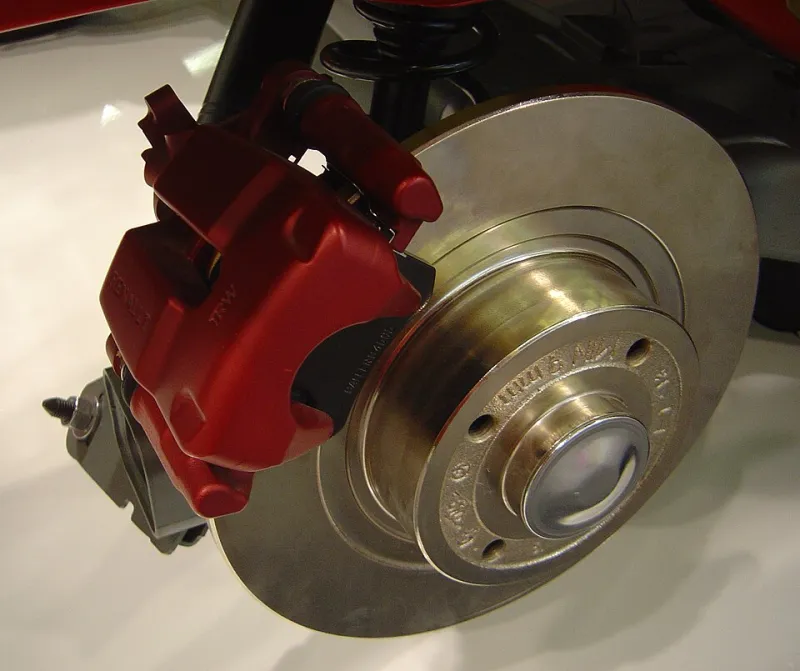
While you're down there, look at the rear brake pipes, the flexi hoses and the condition of the rear discs. A towing car often has rear brakes worked harder than the fronts, which is the opposite of what most buyers assume.
Ask the questions that get real answers
"Has it towed?" gets a shrug. Try instead: "What did you tow with it, and what weight?" and "Did you ever change the gearbox oil because of it?" The answers tell you more than the towbar does. Ask to see any receipt for the towbar fitting, which will date it, and check whether it lines up with how long the seller has owned the car.
One more thing: if you're planning to insure it, tell your insurer there's a towbar. Some treat it as a modification, and it's a lot easier to declare before the policy starts than after a claim.
The verdict
Don't walk away from a towbar, and don't pay a premium for a freshly polished one. Price the risk instead. A towing car with a folder of invoices, an uprated cooling pack and regular gearbox oil changes is a sensible buy at the right money. A towing car with a rattle at idle, DIY electrics and a boot floor you can smell is a clutch, a flywheel and possibly a welding bill in waiting.
Look at the bar, then look at everything the bar has touched. That's the whole trick.