The 15-Minute Plug-In and the £500 Guess: A Driver's Guide to Fault Codes
You know the scene. The engine light comes on, a mate plugs a £20 reader into the socket under the dash, squints at his phone and announces: "P0420. That's your catalytic converter, mate. Six hundred quid." Two weeks and one very expensive invoice later, the light is back — because the cat was never the problem in the first place.
Fault codes are useful. Genuinely. But there's a gap between reading a code and diagnosing a fault, and that gap is where a lot of money quietly disappears. Here's what's actually going on.
What a fault code really is
Since 2001 for petrol cars and 2004 for diesels, anything sold in the UK has had to speak OBD2 (also called EOBD). The system monitors sensors and circuits around the engine and emissions gear, and when something looks out of range it stores a code.
A code is basically an address plus a complaint. P0301 means "misfire detected on cylinder 1". It does not mean "replace the coil pack". P0171 means the engine is running lean on one bank — and that could be a split vacuum hose, a tired MAF sensor, a weak fuel pump, a leaking exhaust before the sensor, or wiring that's rubbed through behind the block. P0420 says the catalyst isn't working efficiently as measured by the oxygen sensors — which might be a dead cat, or might be an exhaust leak, or a lazy lambda sensor telling lies.
The code narrows the search. It doesn't finish it.
Why 'the computer says' isn't the end of the job
A proper diagnostic session goes well beyond the read. A decent technician will look at freeze frame data (a snapshot of engine conditions when the fault was logged), then watch live data while the engine runs, then carry out actuation tests — commanding the EGR valve open, for example, and seeing whether the engine note changes. They'll break out a multimeter for circuit checks, a smoke machine for intake leaks, a compression gauge if misfires are in play, or an oscilloscope when a sensor's signal needs looking at properly.
That work takes time. Time is what you're paying for — not the fifteen minutes with the tablet.
What a diagnostic actually costs in the UK
Prices vary, but roughly:
- Free or £20–£40 — a code read. Sometimes offered free at parts chains or tyre bays. It gets you a number and often a printout.
- £60–£120 plus VAT — a proper diagnostic session at an independent garage, usually an hour's labour.
- £100–£150 plus VAT — main dealer diagnostic charge. Higher overheads, sometimes deeper manufacturer-specific software.
Many garages will deduct the diagnostic fee from the repair bill if you go ahead with the work. That's fair and worth asking about when you book. What you want to avoid is paying a diagnostic fee and a separate fee for them to guess.
The parts cannon problem
There's a shortcut some workshops take: read the code, replace the most commonly associated part, clear the code, hand back the keys. If it works, everyone's happy. If it doesn't, you've paid for a part you didn't need, and the original fault is still there.
Mechanics call this firing the parts cannon. It's not always laziness — sometimes a £60 sensor is cheaper to swap than two hours of testing, and that's a legitimate judgement call. But you're entitled to know which approach is being taken and why.
Signs you're getting a real diagnosis
- A written or verbal explanation of which tests were done, not just which parts were fitted.
- Live data or freeze frame figures shown or printed for you.
- Honesty about uncertainty: "We think it's the sensor, but we'd like it back for a road test" is a good sign, not a bad one.
- Old parts kept for you to see. Ask. It's a reasonable request and a good garage won't flinch.
- A quote that separates diagnosis, parts and labour rather than one lump sum.
Questions worth asking before you authorise work
- Was this a code read or a full diagnostic? And what's the charge for each?
- What test confirmed the part has failed — not just that the code points at it?
- If the new part doesn't fix it, what happens next?
- Will the diagnostic fee come off the repair bill if I go ahead?
- Can I have the fault codes and any printouts in writing?
- Can I have the old parts back?
None of these are confrontational. They're just the questions a careful owner asks, and most technicians will happily answer them.
When to push back politely
If a garage has charged you for a diagnosis and then fitted a part that hasn't fixed the fault, the Consumer Rights Act 2015 is on your side. Services must be carried out with reasonable care and skill. If the diagnosis was part of the service and it was wrong, the garage should be putting it right — not charging you again for a second guess.
Start with a calm phone call: "The light came back on after the work you did. Can we talk through what was tested?" Keep it factual, keep your paperwork, and give them a chance to make it good. Most will. If they won't, that's when you escalate — but you'll rarely need to.
The cheap-reader trap
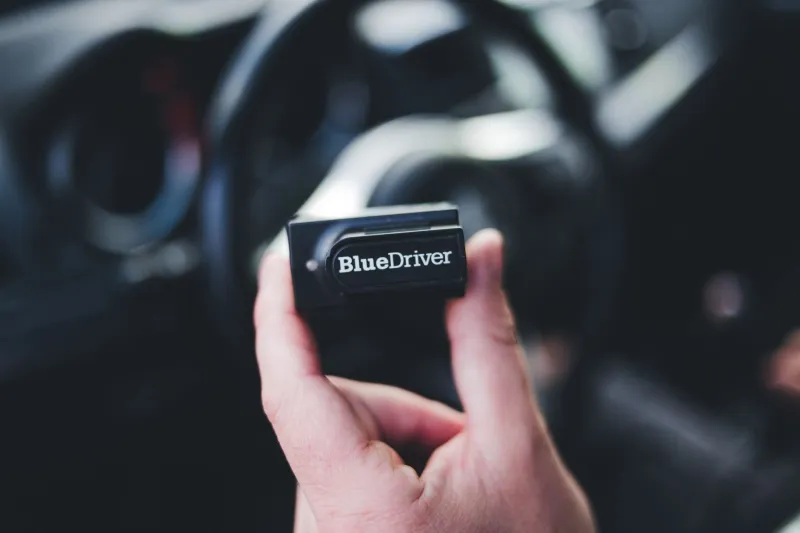
A £15 Bluetooth dongle and a phone app are handy things. Use them to check a code on a car you're thinking of buying, or to confirm a light has stayed off after a repair. Don't use one to diagnose — and definitely don't use one to clear codes before taking the car to a garage. Clearing the fault wipes the freeze frame evidence, which is one of the most useful bits of information a technician has.
The code is a clue. The diagnosis is the work. Paying for one and getting the other is the whole game — and it's worth asking the question out loud before the invoice lands.