Bolted On, Off the Record: The Aftermarket Extras That Can Bite You Later
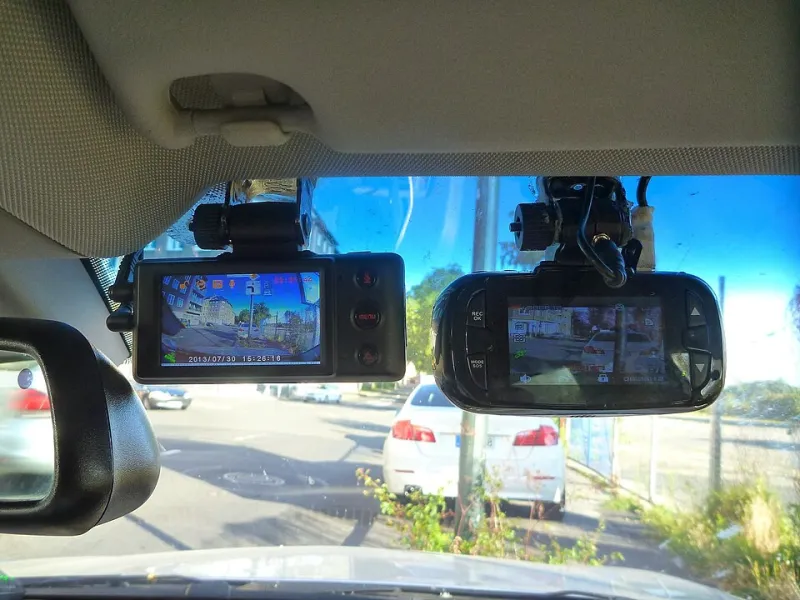
Photo: Fernost, Public domain, via Wikimedia Commons
There is a particular kind of silence in a workshop when a customer mentions the words 'it was only a cheap dash cam'. You can almost hear the service manager reaching for the warranty policy. Aftermarket kit is one of the most common ways a perfectly sensible car turns into a paperwork problem, and it almost never starts with bad intentions. It starts with a £99 gadget, a Saturday morning fitting slot and a YouTube video that made it look easy.
None of this is about telling you to leave your car standard forever. It is about knowing which extras are genuinely low-risk, which ones need a conversation with your insurer, and which ones can give a manufacturer a perfectly legitimate reason to ask questions when something expensive goes pop.
Plug-in versus spliced-in: the first fork in the road
Broadly speaking, aftermarket add-ons fall into two camps. Plug-in kit uses an existing connector, a 12V socket or an OBD port. Hard-wired kit needs a fuse tap, a spliced loom, a drilled hole or a coded module. The first is usually easy to remove and leaves little trace. The second is the one that tends to appear in photographs attached to a warranty claim.
That does not make hard-wiring automatically wrong. A properly fitted tow bar with a dedicated loom can be neater and safer than a universal kit scotch-locked into the rear lights. But 'properly fitted' is doing a lot of work in that sentence. A dedicated loom that talks to the car's body control module is a different animal from a generic bypass relay dangling behind a trim panel.
Dash cams: the fuse tap that keeps the car awake
The classic dash cam problem is not the camera. It is the parking mode. A hard-wired kit that draws power from the fuse box can keep a module awake, confuse the battery management system or flatten a battery over a cold weekend. On modern cars with stop-start and smart charging, the battery is already being managed within an inch of its life. Adding an unknown parasitic drain is asking for a Monday morning no-start and a recovery driver who has seen it all before.
A plug-in camera that uses the 12V socket is the lower-risk option. If you do want parking mode, use a proper voltage-sensitive hard-wire kit and have it fitted by someone who understands the car's shutdown behaviour. Keep the receipt, keep the instructions and note the fuse you tapped. If the battery later fails, that paperwork is your friend.
Parking sensors, tow bars and the drilling question
Parking sensors mean holes in a bumper. That is fine when they are factory-fit or fitted as part of a manufacturer-approved accessory programme. It is less fine when a universal kit is drilled in, wired to a reversing light and left to beep at hedges. The sensors themselves are not an MoT test item, but the wiring can cause lamp faults, CAN bus gremlins and water ingress that a dealer will happily trace back to the bumper.
Tow bars are a bigger deal because they affect towing limits, type approval and, on some cars, the cooling and electrical systems. A tow bar needs to be suitable for the vehicle, and the electrics need to work with the trailer module rather than against it. If the car is still under warranty, ask the dealer or a recognised tow bar specialist about coding. A tow bar that is not declared to your insurer is also a conversation you do not want to have after a rear-end shunt.
Remaps: the invisible modification with a paper trail
A remap is the one that really tests the relationship with your warranty. It can be brilliant — more mid-range torque, better drivability, sometimes a small economy gain on a steady motorway run. It can also raise cylinder pressures, stress a clutch and leave a footprint in the ECU that a dealer can see during diagnostics.
Some manufacturers are relaxed about approved upgrades. Others will flag the car the moment the software is checked. The legal position in the UK is not that any modification instantly voids the whole warranty; the manufacturer has to show that the modification caused the failure. But proving that point can take months, and you will be without the car while it happens. If you remap, use a reputable specialist, keep the before-and-after paperwork and tell your insurer. 'I forgot' is not a declared modification.
What the maker will usually live with
There is no universal list, but the pattern is fairly predictable. Genuine manufacturer accessories fitted by a dealer are the easiest route. Plug-in devices that leave no permanent trace are usually low-risk. Cosmetic changes that do not touch the loom or the drivetrain rarely cause a problem. Anything that alters emissions, power output, towing capacity or the vehicle's electrical architecture is where the questions start.
It is also worth reading the warranty terms before you book the fitter. Some policies specifically exclude consequential damage from non-approved accessories. Others are quieter about it until a claim arrives. Either way, the burden tends to fall on you to show that your £99 gadget did not cause the £1,900 repair.
The MoT angle nobody mentions
Most aftermarket extras are not direct MoT failures. A dash cam is not tested. Parking sensors are not tested. A tow bar is not automatically a fail. But the MoT tester can fail a car for a dangerous modification, an obscured view, a faulty lamp or insecure wiring. A dash cam dangling in the driver's eyeline is an obstruction. A tow bar electrics install that backfeeds the indicators is a lighting fault. A remap that pushes emissions out of range can show up on the emissions test. The MoT is not a modification audit, but it is not blind either.
The paperwork that protects you
Keep the invoice, the fitting instructions, the make and model of the kit and the name of the fitter. If the kit is insurance-relevant, tell your insurer before the renewal, not after the claim. If the car is under warranty, ask the dealer in writing whether the accessory affects cover. A short email is worth more than a verbal 'should be fine' from a service desk.
And if you are buying a used car, look for the tell-tale signs: extra switches, non-standard wiring, a fuse tap, a tow bar with no paperwork, a remap sticker in the door shut. A modified car can be a great buy, but only if you know what you are buying.
The aftermarket is full of genuinely useful kit. The trap is not the gadget itself. It is the assumption that nobody will ever ask who fitted it, how it was wired and whether you told anyone. A few minutes of paperwork now beats a warranty argument later.