Salt Doesn't Sleep: The Under-Car Pipe Check That Beats a January Garage Bill
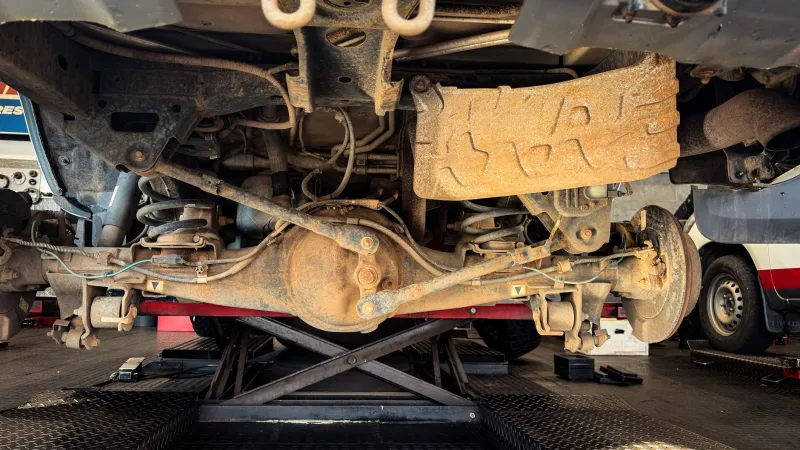
By the time the first gritter rumbles past in November 2026, the salt is already doing its quiet work. You can wash the bodywork every Sunday and still miss the bit that matters: the steel pipes tucked under the car, coated in road spray and never quite dry. Brake lines and fuel lines live down there. They don't complain. They just corrode slowly until an MOT tester puts a screwdriver near them and sucks air through his teeth.
This isn't a job that needs a fully equipped workshop. A torch, a bit of cardboard, and ten minutes on your knees can tell you plenty. What it won't do is turn you into a brake pipe fitter. The skill is knowing what you're looking at, and knowing when to stop looking and ring the garage.
Why salt finds the pipes before you do
Road salt doesn't eat metal like a cartoon acid. It does something sneakier: it keeps the underside damp for longer. Add mud, grit, and the odd splash of oily road film, and you've got a nice little paste that sits against brake and fuel lines. The factory coating on those pipes is tough, but it only takes one stone chip or one cracked plastic clip to let moisture in. Then it creeps under the coating, and the rust starts from a place you can't see until it flakes.
Rear brake lines are the usual suspects. They run from the front of the car along the floor, over the rear axle, and out to the wheels. On older cars they often pass above the rear subframe or behind a plastic wheel-arch liner. Fuel lines follow a similar route, plus the filler neck area, which is a magnet for salty spray and mud. A pipe that looks fine from the side of the car can be a crusty mess once you shine a light above it.
The ten-minute check, no ramp required
Park on level ground, leave it in gear or Park, chock the wheels, and don't rely on a scissor jack for anything underneath. You're not going under the whole car. You're looking from the edges, through the wheel arches, and along the sills.
Start at the front wheels. Turn the steering fully one way, then the other. With a torch, look behind each wheel at the brake hose and the metal pipe it connects to. Follow the metal line back as far as you can see. Then do the same at the rear wheels. On many cars you can crouch behind the back bumper and see the lines running over the axle or along the floor. A phone torch works, but a proper LED torch is better because you can angle it along the pipe rather than just at it.
Next, slide a piece of cardboard under the middle of the car and look along the inner sills and floor pan. You're checking the pipes clipped to the underside, not just the sills themselves. Look at the plastic clips too. A broken clip lets the pipe rub, and a rubbing pipe is a future leak. Around the fuel tank, look at the tank straps, the fuel filter area if it's accessible, and the filler neck inside the rear wheel arch. That's where salt and mud love to gather.
Finally, open the bonnet and have a quick look at the brake lines near the master cylinder and ABS pump. This area is less exposed to salt, but it's worth knowing what clean looks like so you notice a damp union later.
What corrosion actually looks like
Surface rust is the orange-brown fuzz on the outside of a component. It's ugly, but on a brake pipe it's not automatically a death sentence. What you're hunting for is the next stage: flaking coating, rough pitting, or a pipe that looks swollen. Run your finger along a clean section — with a glove on — and feel for a step where the coating has lifted. Shine the torch along the length of the pipe rather than straight at it. Shadows show up pitting better than direct light.
Brake fluid leaking is the obvious red flag. Look for dark, wet patches at unions or along the pipe. Brake fluid can strip paint, so a clean patch on a dirty underside is suspicious. Fuel lines are similar, but a petrol or diesel smell is your warning. Don't ignore a damp fitting and assume it's just oil. Investigate until you know.
White or green crust around brass unions is also worth a second look. It can be harmless surface reaction, or it can be the start of a joint that won't come apart without drama. Either way, it goes on the list.
When a wire brush and wax is enough
If the pipe is solid, the coating is mostly intact, and the rust is light surface bloom, you can slow things down. Clean the area gently — a soft wire brush or abrasive pad, not a grinder — and treat it with a rust converter if needed. Then cover it with a proper wax-based cavity wax or underbody protection. Not old engine oil, and not a thick blob of underseal over wet rust. You want to keep water out, not seal it in.
Replace any cracked or missing clips. A pipe that can rattle against the floor or axle is wearing through its coating every mile. Use the correct-sized clip, not a cable tie that will perish by February.
This is maintenance, not a repair. If you're brushing away flakes and finding pits underneath, stop. A brake pipe is not the place to test your flaring skills or your optimism.
When it's a garage job
A brake pipe with deep pitting, flaking metal, or any sign of weeping needs replacing. Same for a fuel line that's damp or heavily corroded. On many cars, replacing a section means making up a new pipe with the correct flares, routing it safely, and bleeding the brakes afterwards. That's a workshop job for most drivers, and it's not the place to save forty quid.
Ask the garage to show you the old pipe. A decent mechanic will happily point out where it failed. If the rear lines are gone, ask them to check the ones above the tank and along the axle while they're in there. It's cheaper to replace two pipes in one visit than to pay for the same labour twice.
Salt doesn't sleep, but you don't need to lie awake either. Ten minutes with a torch now, while the roads are wet and the gritters are busy, is a lot cheaper than a January recovery truck and a brake pipe that lets go when you need it most. If something looks borderline, get it looked at properly. Your brakes have enough to do without fighting corrosion as well.